150
farmers paid faster
Paid in 7 days — not 60 to 120. Direct from FPOs.
thegudco.in
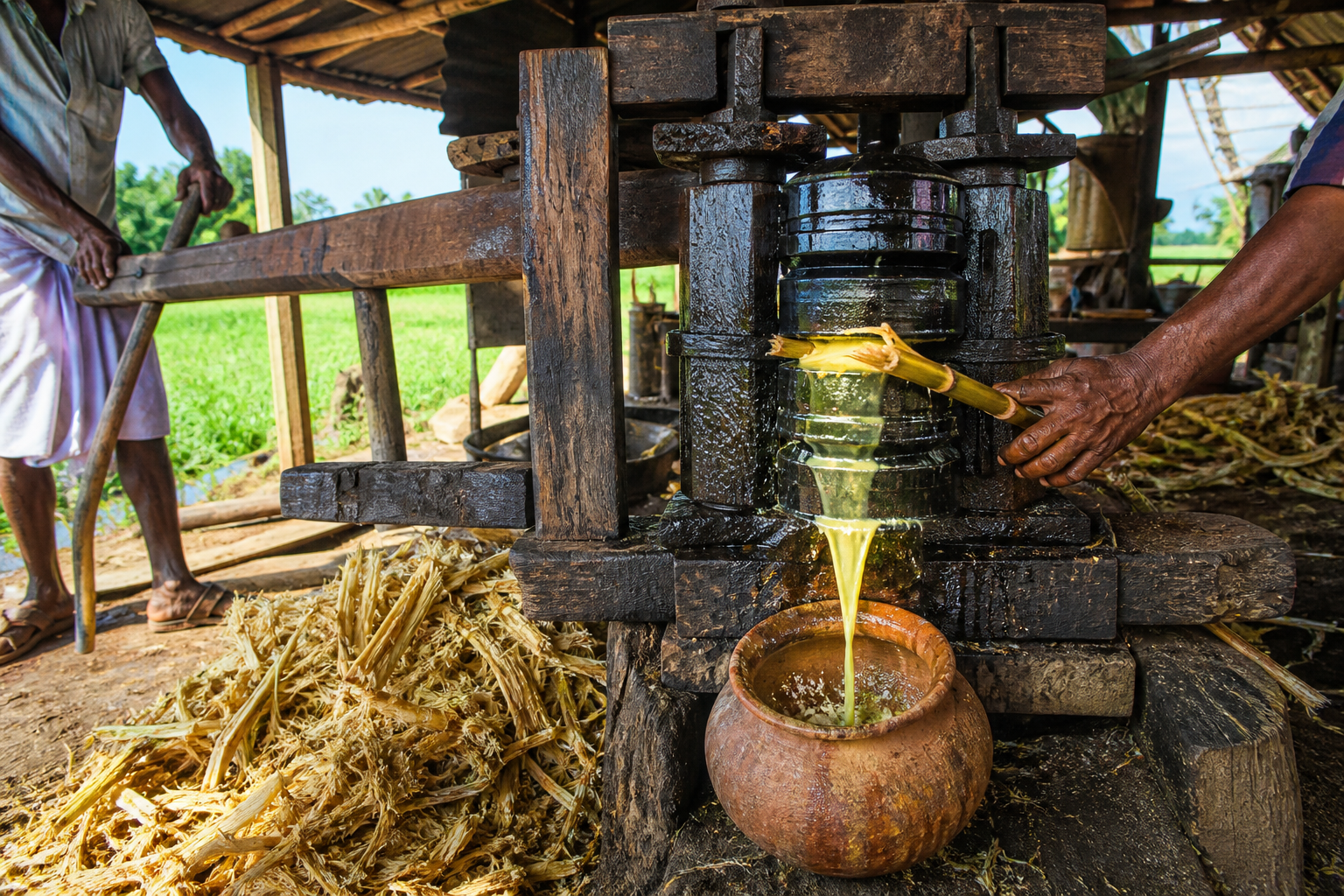
India pays cane late, and the value leaves the village. The Gud Co buys gur from FPOs, keeps the boil local, and pays within seven days — so a small grower is not financing a mill’s working capital.
150
farmers paid faster
2
FPOs on MoU
7d
to pay, not 60–120
10–12%
over mill rate
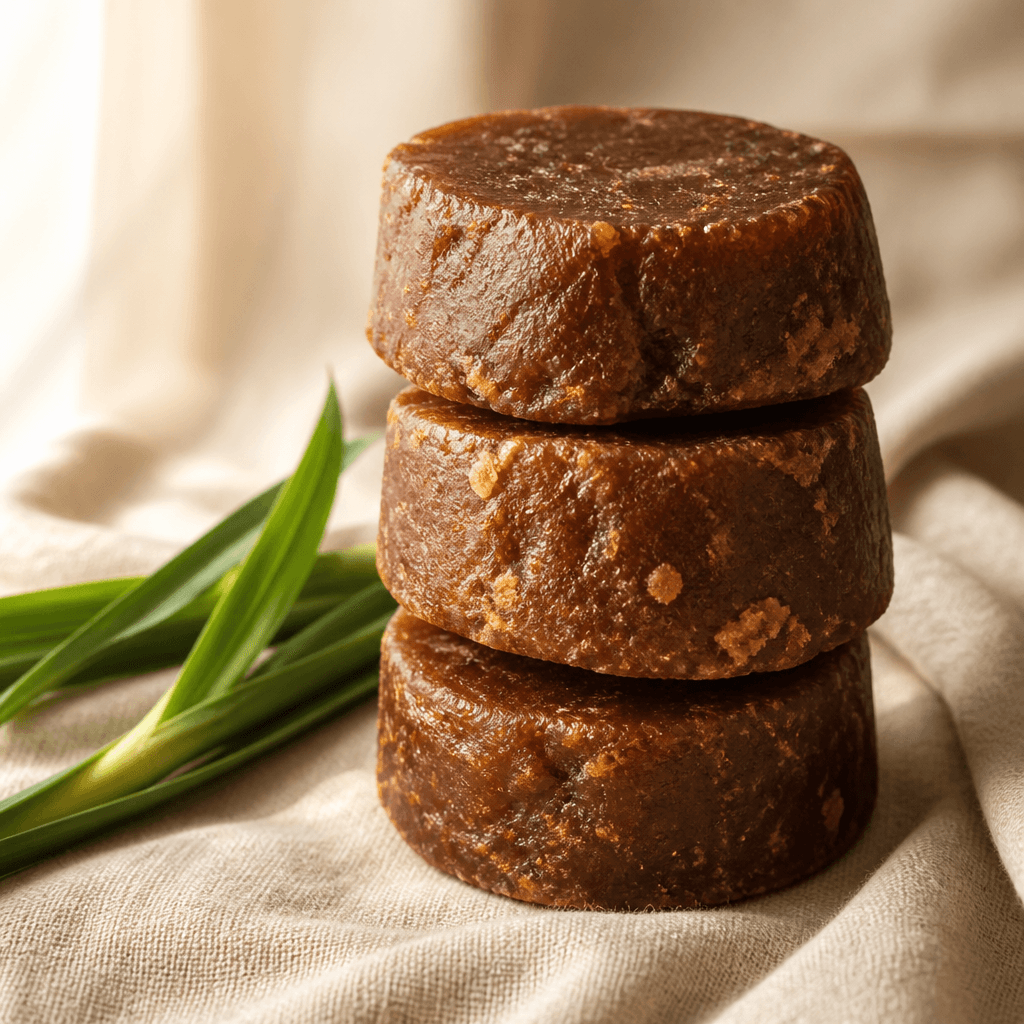
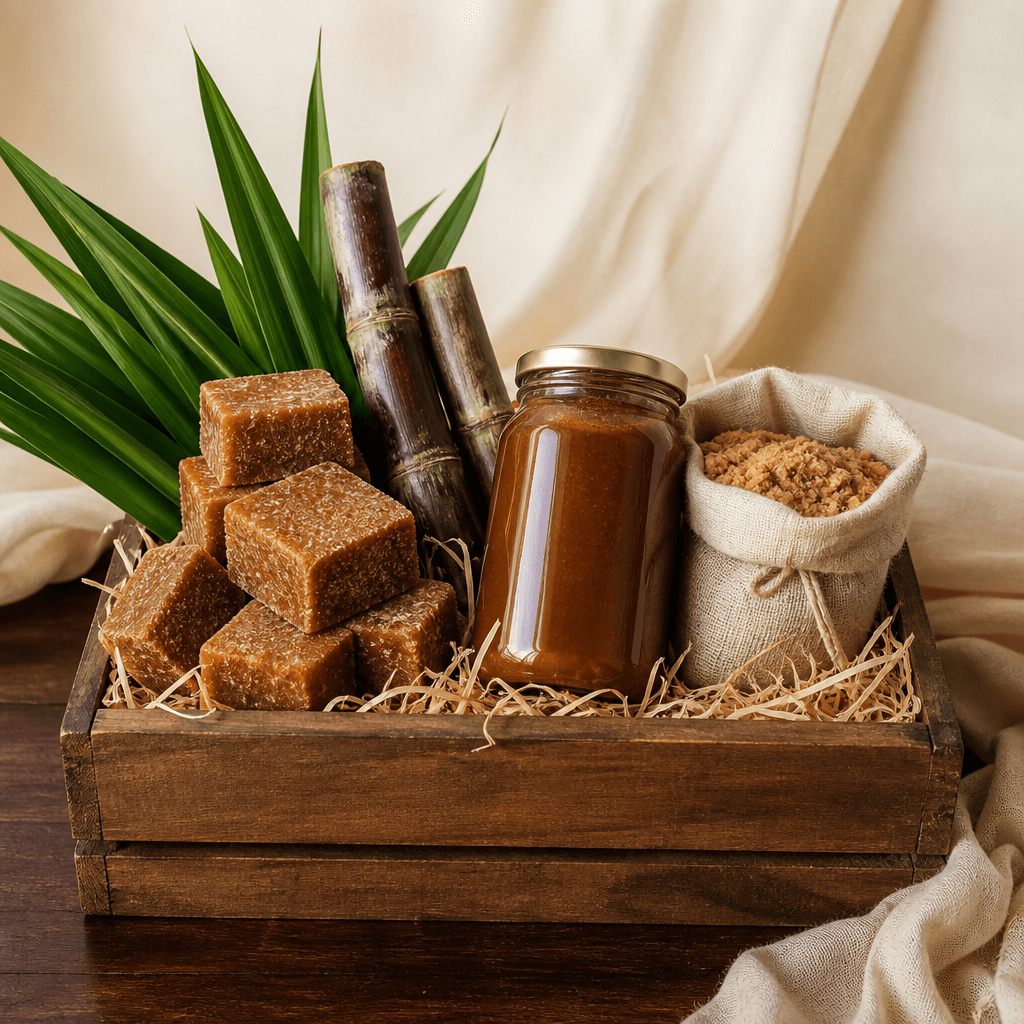
Named gur, packed in the village, paid for in seven days — the packs kitchens reorder.
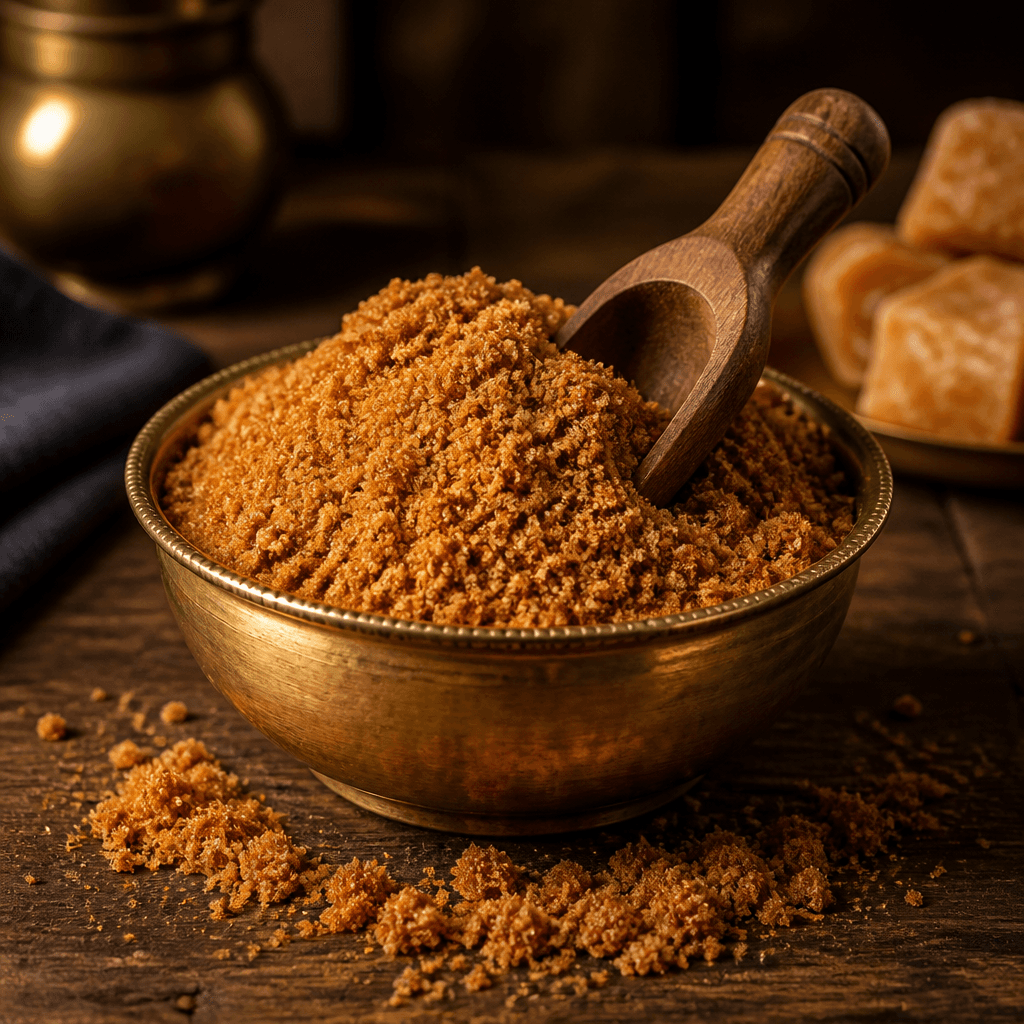
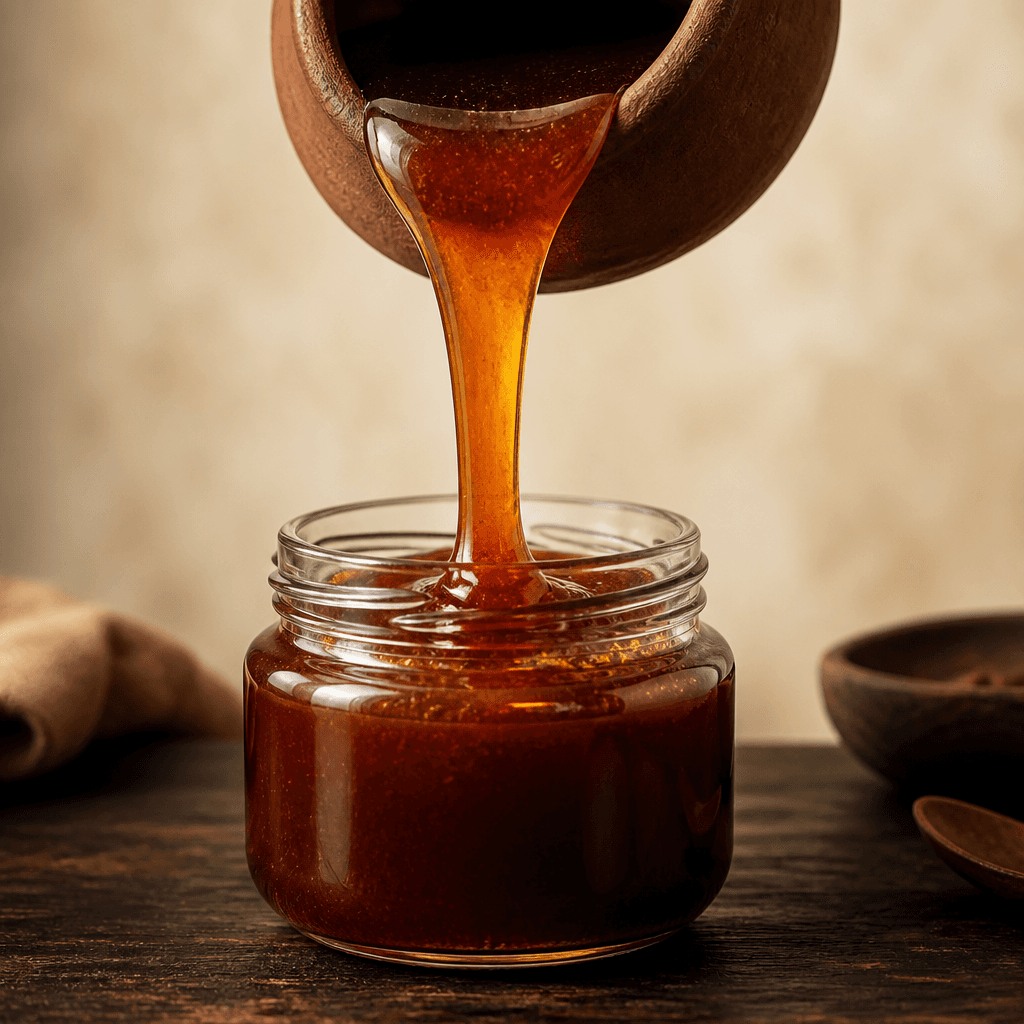
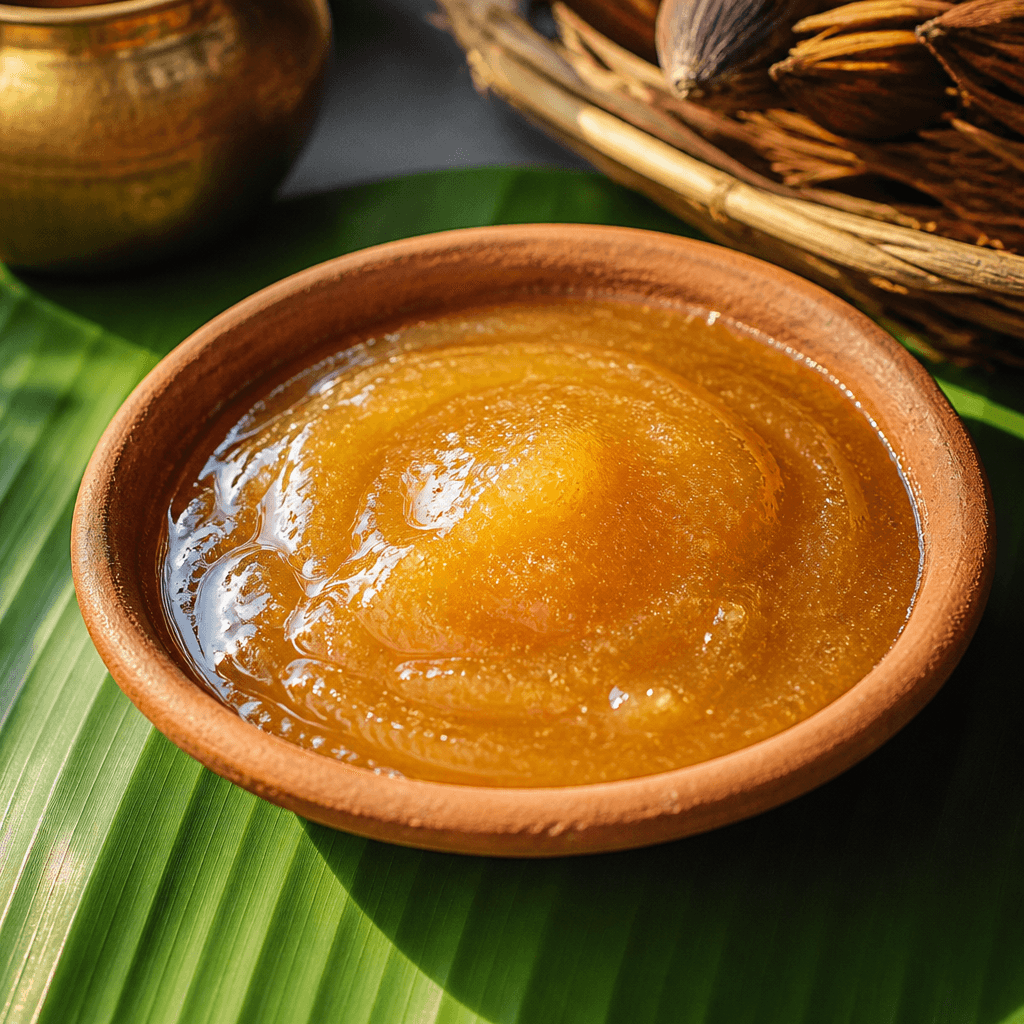
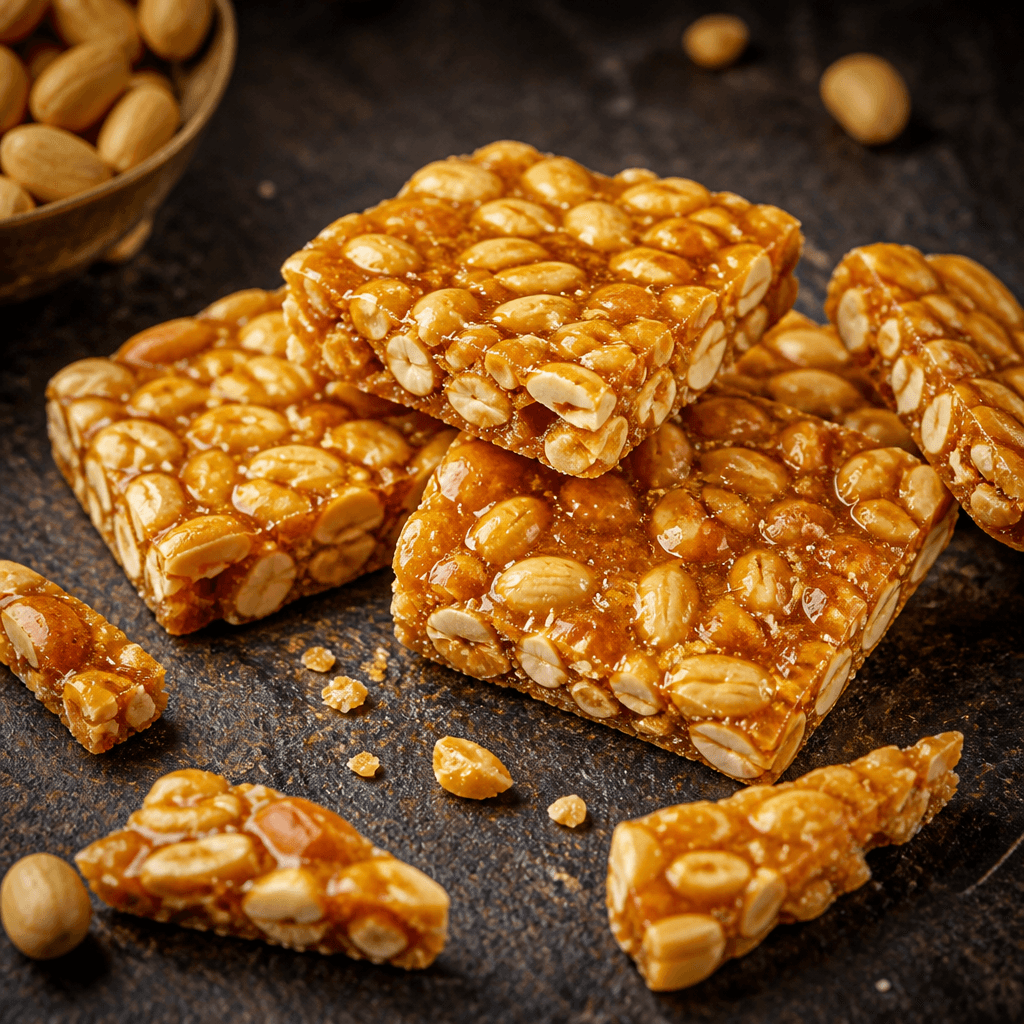
Village formats — not a mandi mix. Pick how the cane was set.
The problem we refuse to decorate
60–120 days
Typical wait for mill payment. Cash locked while seed, school, and ration bills do not pause.
₹1,000s Cr
Unpaid cane arrears owed to farmers across India at any given time. That is not a rounding error.
86%+
of India’s farmers are small and marginal. They sell raw cane at about ₹400 / quintal because they cannot reach a shelf.
Processing, branding, and retail happen far from the field. Village gur-making dies for lack of a market. Karnataka and Uttar Pradesh have felt this hardest. We buy the boil, not the distress.
Farmer-first, in four moves
01 · Source
Village-made gur, bought only through farmer producer organisations. No exploitative middlemen, no unnamed mandi heap.
02 · Process
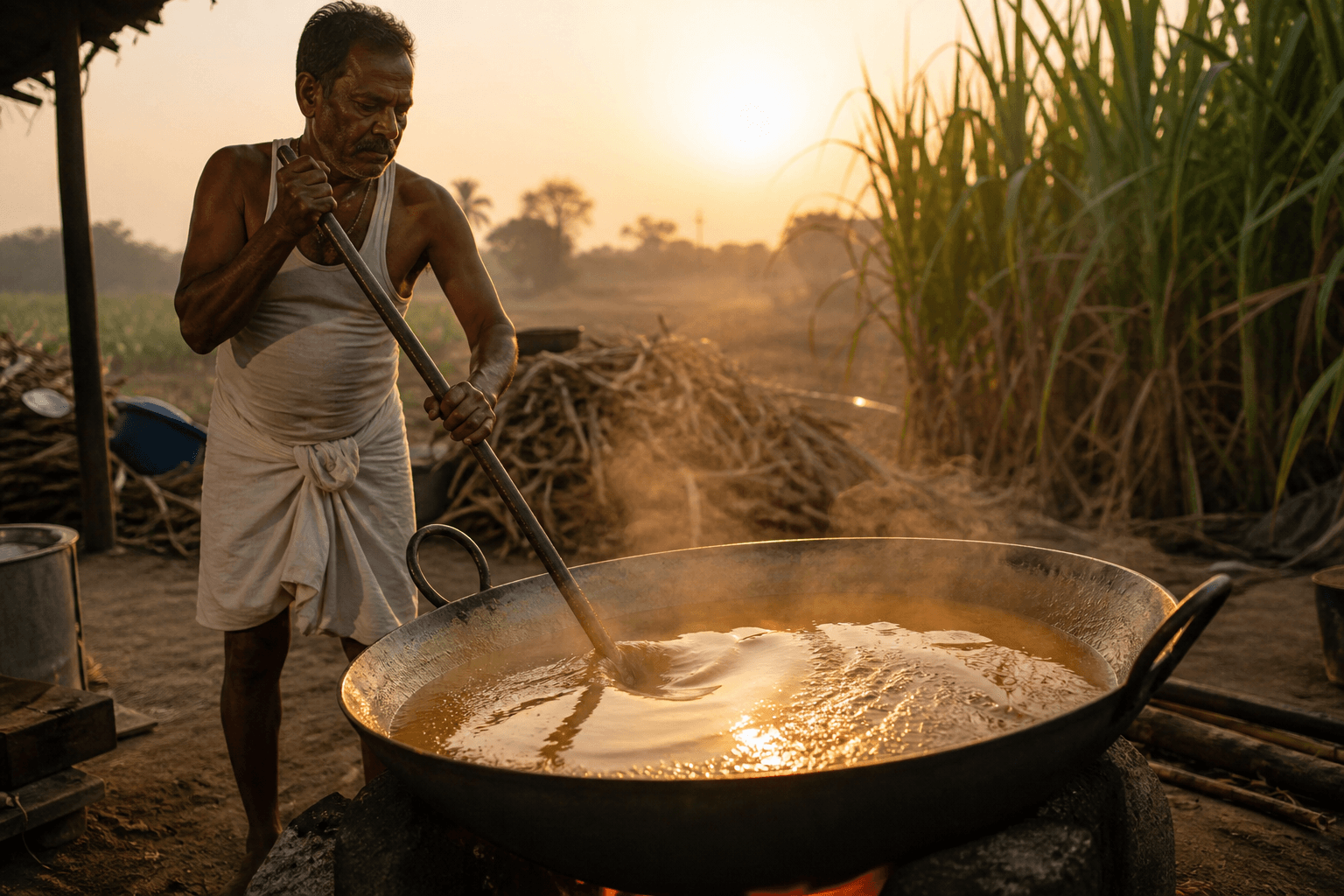
Value-add happens in revived kolhu units and women-run packing sheds — the margin stays where the cane grew.
03 · Pay
Mills lock cash for 60–120 days. We pay within seven. Cane arrears are a national scandal; they are not our model.
04 · Sell
Clean label, named origin, a price that can hold a fair farm rate without a grant on every kilo.
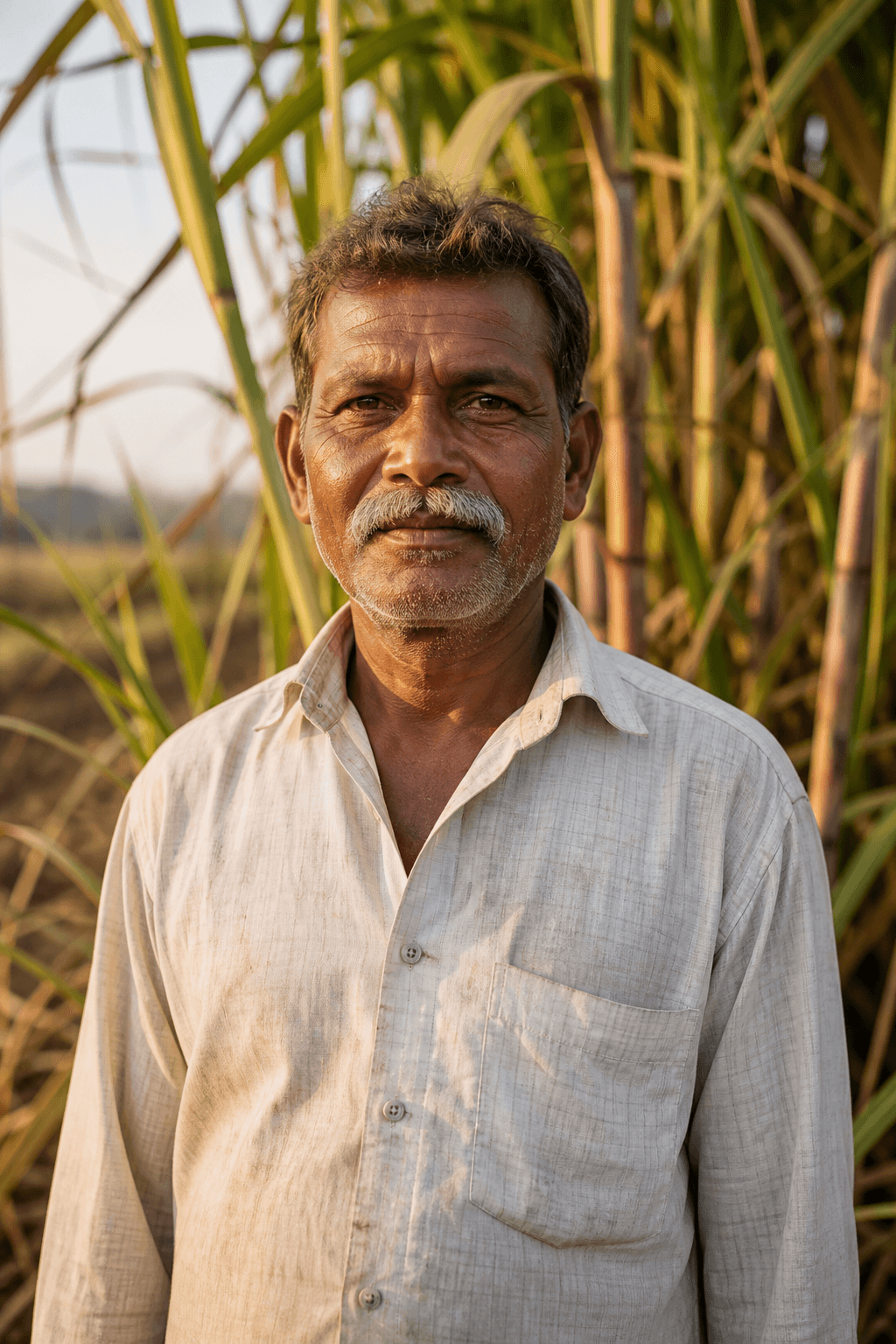
How jaggery changes one life
“The mill used to take my cane and my waiting. Now the FPO takes the gur, and the money is in the week.”
Same farmer, same land — 10–12% price, paid in a week, and 30% household income because his wife earns on the SHG packing line.
The full impact ledgerFour livelihoods, one chain
Small and marginal cane farmers — 86%+ of India’s farms — get a posted premium and assured offtake through their own FPO.
The producer organisation bargains quality and offtake. A small grower is not alone at the mill gate.
Village gur-makers get an order book. A dying kolhu craft lives because someone will buy the boil.
Grading, packing, and drink-powder lines are paid village work — not unpaid household labour.
Built to last without a grant on every kilo